Sacred Forest
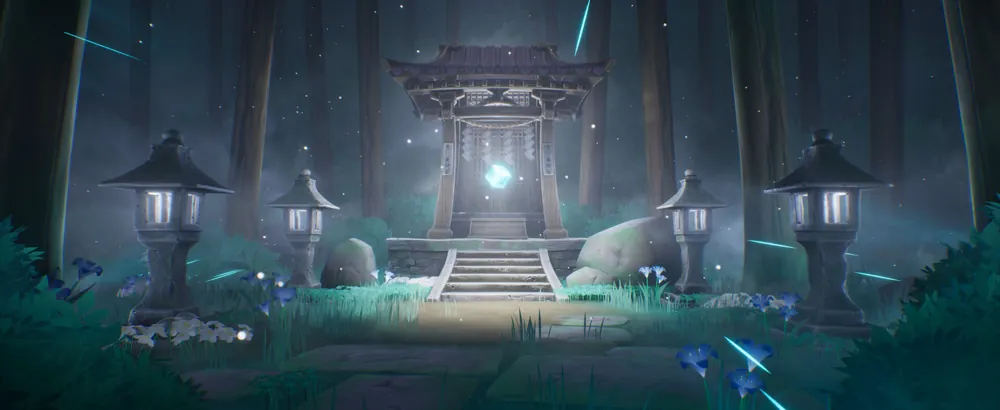
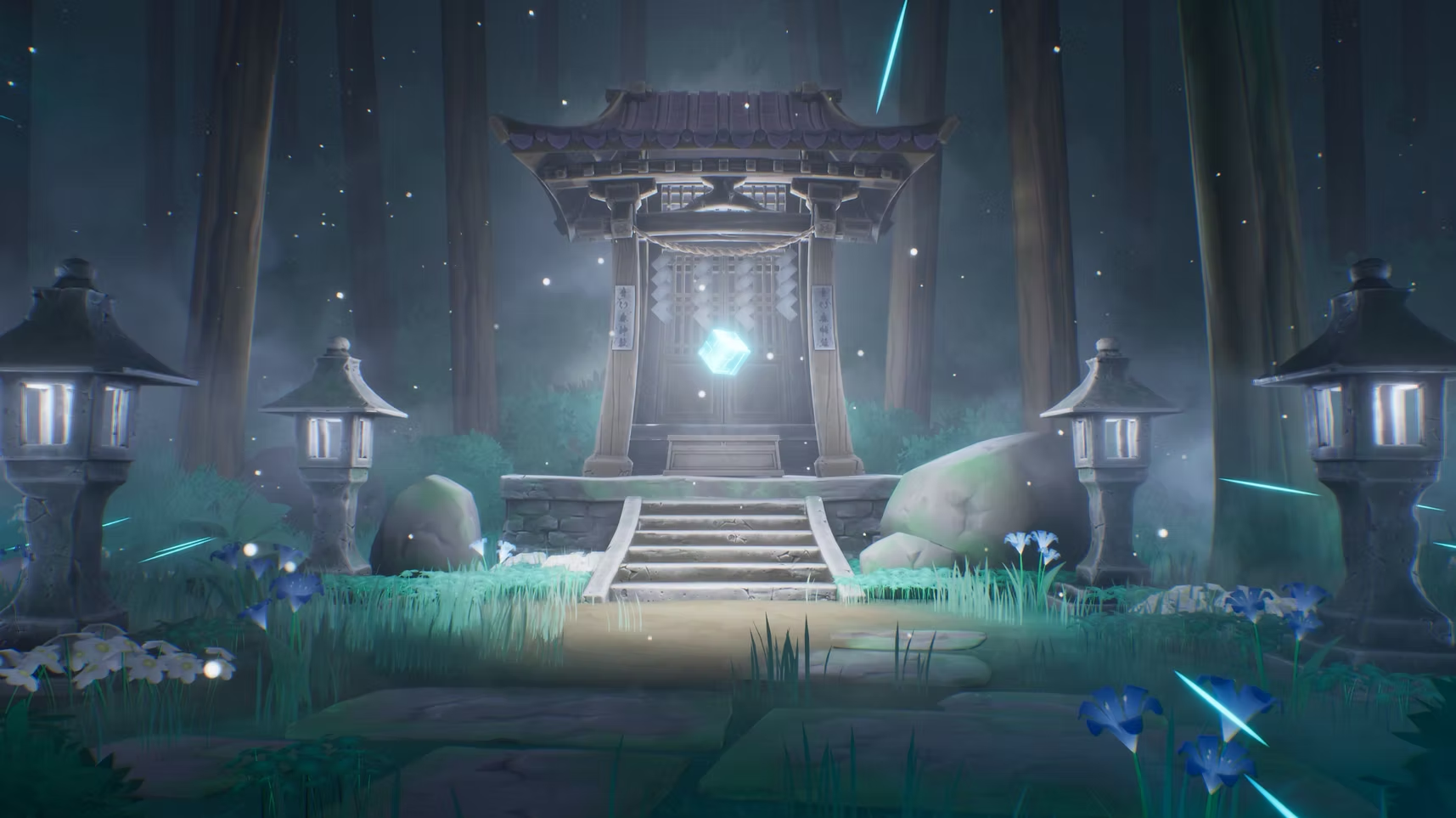
A stylized forest shrine developed end to end through modeling, procedural materials, foliage, lighting, effects, and engine assembly.
- Role
- Environment / Technical Artist
- Year
- 2026
- Stack
- Unreal EngineEnvironment ArtSubstanceMaya / Python
Project brief
At a glance- 01Design goal
- Translate a stylized concept into a cohesive realtime environment supported by consistent materials, foliage, lighting, and effects.
- 02What I owned
- Environment production and technical art: modeling, sculpting, texturing, foliage, lighting, VFX, shader integration, and Python tooling.
- 03Scope
- Individual environment project based on an original concept by En Moroldo.
Delivered
- Completed the scene end to end, from its hero shrine and procedural materials through foliage, atmosphere, and final assembly.
- Automated sphere-based vertex-normal transfers to keep stylized foliage lighting consistent across the asset set.
Overview
Sacred Forest is a stylized environment built to carry a consistent visual language from individual assets through the final scene. I handled the modeling, sculpting, texturing, lighting, visual effects, foliage, and engine assembly, using a compact production pipeline across Maya, ZBrush, Substance Painter, Substance Designer, Photoshop, and Unreal Engine.
- Modeled, sculpted, baked, and textured the shrine as the environment's primary focal point.
- Created procedural and hand-painted materials, modular foliage, lighting, and atmospheric effects.
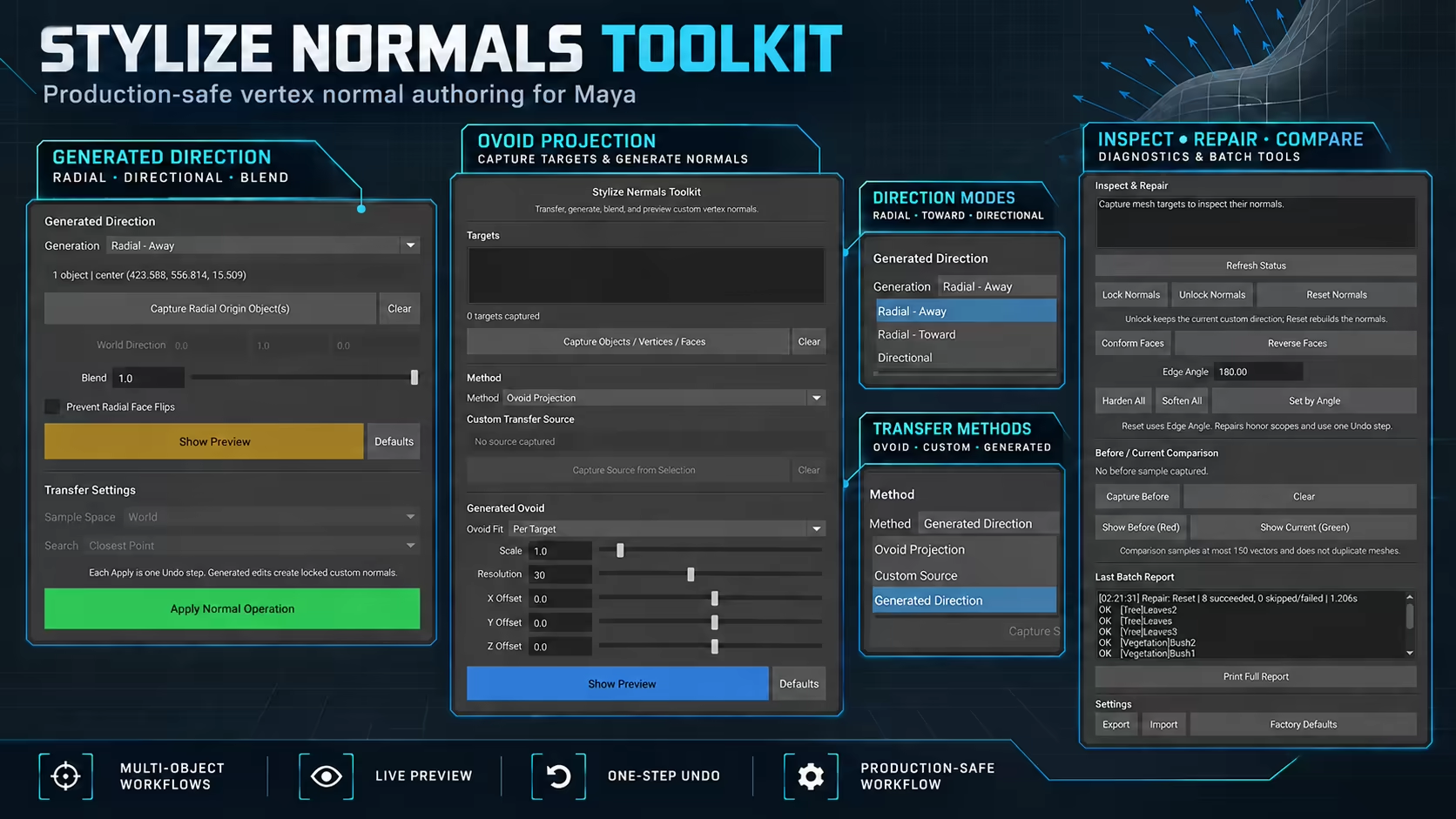
- Built a Maya Python tool to automate vertex-normal transfers for stylized foliage assets.
Media
01 / Focal asset
Stylized shrine
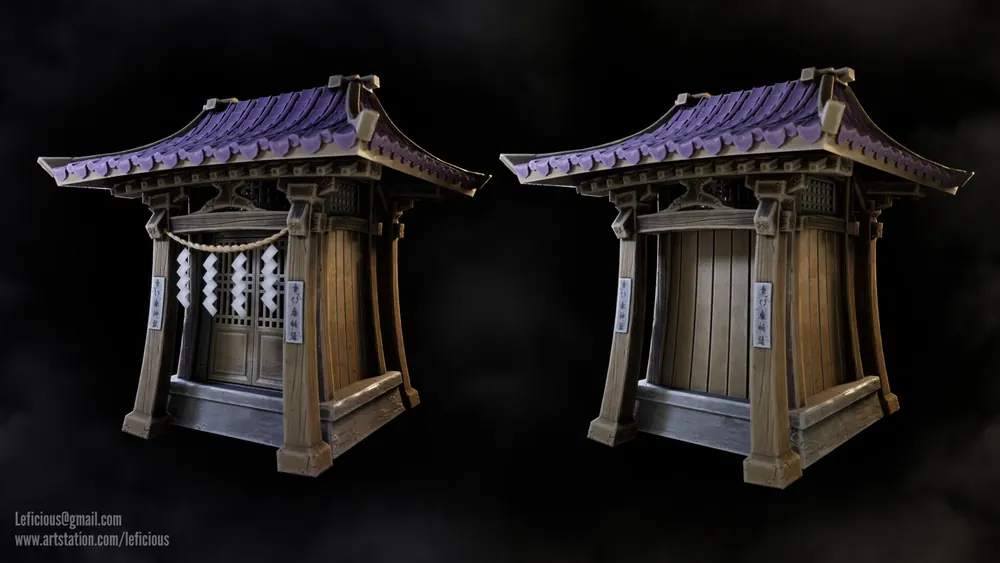
The shrine anchors the composition and establishes the environment's shape language. Its low-poly structure was modeled in Maya, then taken into ZBrush for a high-poly sculpting pass before being baked and textured in Substance Painter.
Detail and grunge information was condensed into packed texture maps and combined through reusable material functions. This kept the asset flexible in-engine while reducing the number of separate textures and material operations needed for the final result.
02 / Surface language
Procedural and painted textures
The environment's stylized surfaces were generated procedurally in Substance Designer, then adjusted in ZBrush and Photoshop where more authored control was needed. Building the materials from shared shape and wear principles helped the shrine, rocks, terrain, and foliage sit within the same visual treatment.
The cracked stone and wood materials were built around broad, readable surface forms that hold up at environment scale. Their shared procedural approach made it easier to maintain a consistent level of wear and stylization across the scene.
03 / Scene integration
Foliage, blending, and tooling
Foliage was assembled from lightweight cards using a hand-painted texture atlas. In Unreal Engine, Runtime Virtual Texture data samples the landscape color and feeds it into the foliage material, helping plants blend into the terrain instead of reading as disconnected assets.
Bushes and other fuller forms use vertex normals transferred from a sphere to produce softer, more cohesive lighting. I built a Python utility in Maya to automate that transfer workflow, reducing a repetitive asset-preparation step and keeping the treatment consistent across the foliage set.
Related gallery work